The Complete Guide to Pallet Racking Safety in Atlantic Canada
June 26, 2026

When most organizations invest in pallet racking, the focus is on capacity. How many pallets can be stored? How efficiently can inventory be organized? How much floor space can be recovered? These are the right questions at the purchasing stage, but they often leave out the question that matters most over the life of the system: how do we keep it safe?
Every day, warehouse teams move thousands of pounds of inventory through racking systems that are expected to perform reliably under constant use. Forklifts operate within inches of uprights. Heavy loads are placed and removed repeatedly. Inventory profiles change. Operations grow. Over time, these daily activities create wear and stress that can affect structural integrity in ways that are not always visible from the aisle.
This guide covers everything Atlantic Canadian businesses need to know about pallet racking safety: how damage occurs, what the warning signs look like, what Canadian guidelines require, how inspections should be structured, and how Stor-It Systems supports organizations that take a proactive approach to warehouse safety.
Why Racking Safety Is a Structural Issue, Not Just a Compliance Issue
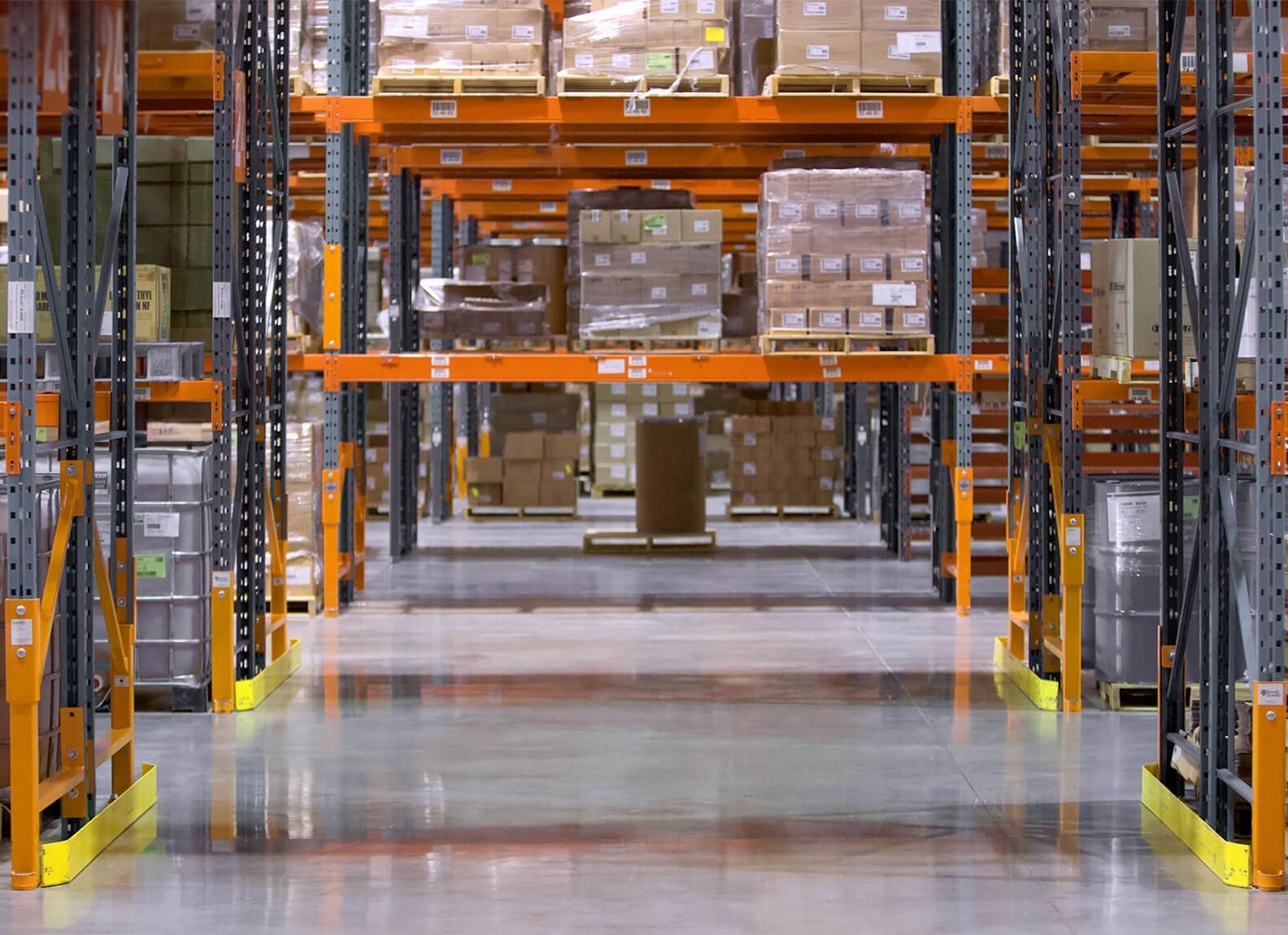
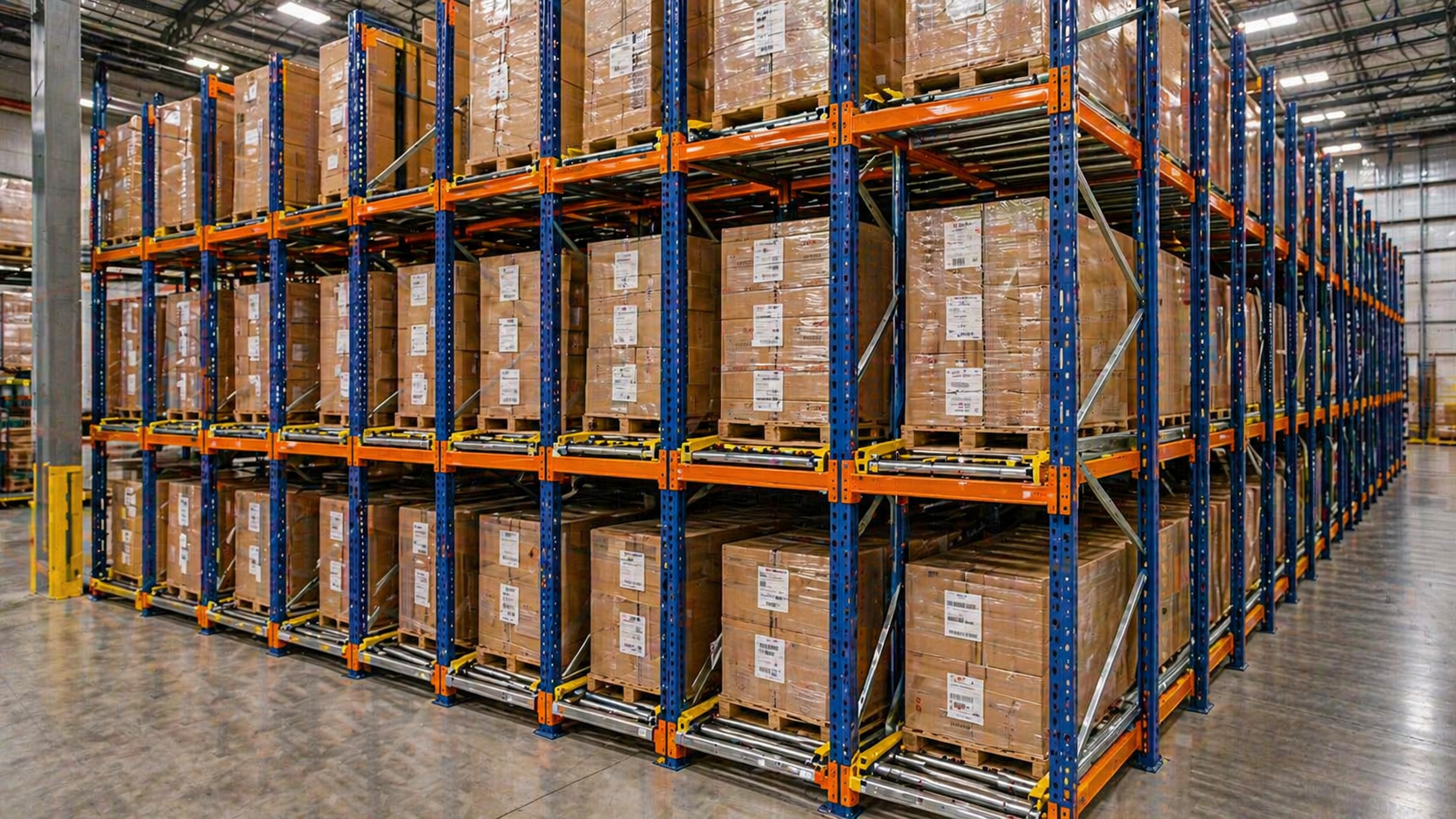
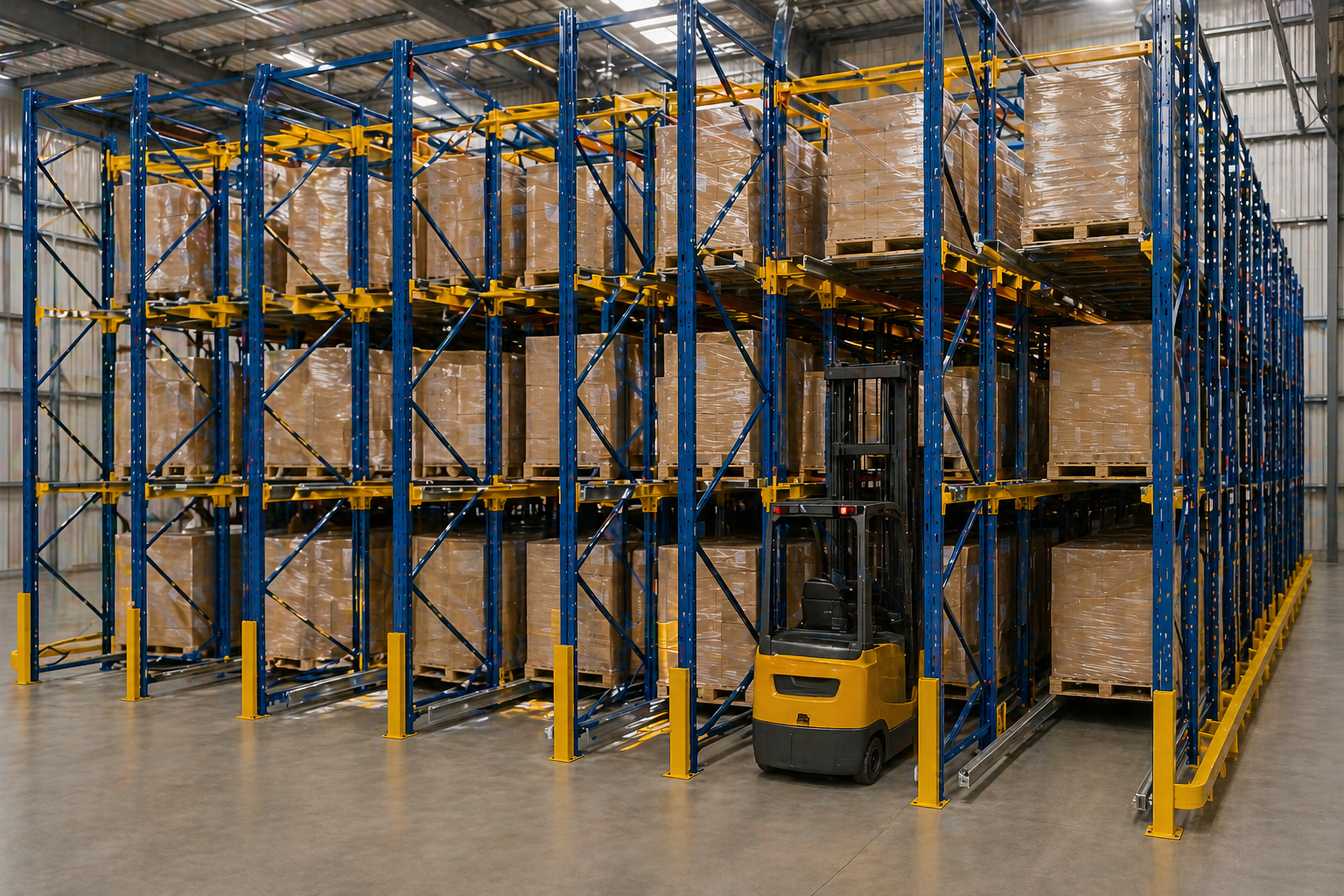
Pallet racking is not shelving. It is a structural storage system that functions as load-bearing infrastructure inside your facility. When components are damaged, overloaded, or improperly maintained, the risk extends far beyond the rack itself. A partial or full collapse can injure employees, destroy inventory, damage equipment, and disrupt operations for days or weeks.
Many organizations underestimate how much they rely on their racking until a portion of the system becomes unavailable. When a bay must be taken out of service for repair, capacity shrinks. Workflow changes. Inventory must be relocated. In serious cases, entire warehouse zones may need to be shut down. The true cost of rack damage is rarely limited to the repair bill itself.
Understanding racking safety is about protecting people, protecting assets, and protecting the long-term performance of the operation. It begins with understanding how damage happens.
How Rack Damage Actually Occurs
One of the most common misconceptions about racking damage is that it results from dramatic events. In reality, most damage accumulates through small, routine incidents that each seem minor at the time.
A forklift clips an upright while placing a pallet. A pallet is loaded unevenly and shifts during storage. An operator catches a frame while maneuvering in a tight aisle. In each case, the incident appears manageable. Operations continue. No corrective action is taken. Weeks pass. Additional incidents occur. The component that was slightly bent becomes more deformed. What started as a minor issue quietly becomes a meaningful structural concern.
Forklift contact remains the leading cause of rack damage across North American warehouses. But it is not the only risk. Improper loading practices, missing components, unauthorized modifications, overloading beyond rated capacity, and inadequate anchoring can all contribute to structural problems that are not immediately visible without a closer inspection. Learn more about pallet racking systems and their specifications.
Warning Signs You Should Never Ignore
Developing awareness of common warning signs is one of the most practical things any warehouse team can do. The earlier concerns are identified, the less expensive and disruptive they are to address. The indicators below should trigger an immediate evaluation:
- Bent uprights: Any visible deformation from impact, even minor, requires attention. Deformation affects load distribution across the entire frame.
- Beam damage: Visible deflection beyond normal load flex, or any impact marks, may indicate a larger structural concern.
- Leaning racking: Any racking system that is not plumb and level in every direction warrants further evaluation.
- Missing safety clips: Beam connectors must be present at both ends of every beam. Missing clips are a common finding and a straightforward fix when caught early.
- Damaged anchors: Loose, bent, or missing floor anchor hardware compromises the entire system's stability.
- Missing bracing: Horizontal or diagonal bracing absent from any frame panel significantly reduces structural capacity.
- Loose hardware: Bolts, pins, or connectors that are not properly secured should be addressed promptly.
- Overloaded bays: Pallets stacked above the rated beam level capacity create immediate risk.
The most important lesson is this: minor damage rarely becomes less expensive over time. Early intervention is almost always the most cost-effective solution. If a team member notices any of these signs, the affected area should be flagged and evaluated before further use.
What Canadian Guidelines Require
Pallet racking installations in Canada are governed by national standards that establish minimum requirements for safe design, installation, and ongoing use. Understanding these requirements helps organizations know what to expect from a compliant installation and what to look for in an inspection.
All pallet racking must be anchored to a concrete slab. Installation on gravel, asphalt, compacted dirt, or patio stones is not permitted regardless of the load being applied. The anchor specification may vary based on application, seismic zone, and floor thickness, which is why engineered drawings are important for any new installation.
Engineered capacity placards must be displayed on the installation. These placards specify the maximum load per beam level and the total frame capacity, and they must reflect the actual configuration of the system as installed. If the system is modified after installation, the placards need to be updated accordingly.
Regular inspections are strongly recommended, and in many insurance and occupational health and safety frameworks, they are expected. For organizations across New Brunswick, Nova Scotia, PEI, and Newfoundland, each province has occupational health and safety regulations that establish employer obligations around workplace equipment and hazard identification.
Stor-It Systems provides professional installation to Canadian standards on every project. Learn more about our installation services.
How Inspections Should Be Structured
The most effective rack safety programs use a layered inspection approach that combines daily employee awareness with more formal periodic reviews. No single inspection frequency is sufficient on its own, and no single person should be the only set of eyes on a racking system.
Daily Awareness
Every person who operates in the warehouse should be able to recognize the most common warning signs of rack damage. This does not require formal training in structural engineering; it requires knowing what bent uprights look like, understanding that missing safety clips need to be reported, and feeling confident that raising a concern will result in action. When employees treat safety awareness as part of the job, issues are caught at their earliest and least costly stage.
Monthly Internal Reviews
A designated team member should complete a documented walk-through of all racking in the facility at least monthly. This review should cover all uprights, beams, anchors, bracing, and load placards. Any concerns identified should be recorded and assigned a corrective action with a clear timeline. Documentation matters: it creates accountability, tracks recurring issues, and demonstrates due diligence if an incident ever occurs.
Annual Third-Party Inspections
A professional third-party inspection provides an objective assessment of overall system condition by someone with the expertise to evaluate structural concerns that may not be obvious to facility staff. Third-party inspections often identify issues that have been overlooked internally, sometimes for years. Stor-It Systems offers rack inspection and repair services throughout Atlantic Canada. Whether you need a one-time assessment or want to establish an ongoing inspection schedule, our team can help.
The Cost of Delayed Repairs
Organizations frequently postpone racking repairs because the damage appears manageable and operations are continuing. The rack is holding. Inventory is stored. The system appears functional. Unfortunately, this logic tends to increase both risk and cost over time.
As damage progresses, repair options often become more limited. What could have been a straightforward component replacement becomes a more complex project involving structural modifications or adjacent component replacements. The operational cost also increases as damaged bays are avoided, inventory is relocated to accommodate reduced capacity, and employees work around a constraint that could have been resolved quickly.
The goal of a proactive maintenance program is not simply to avoid catastrophic failure. It is to keep the system performing at full capacity and full safety, minimize unplanned disruptions, and protect the investment the organization has already made. Our preventative maintenance program is designed around exactly this goal.
Repair or Replace? Making the Right Call
Not every damaged rack component requires replacement, and not every damaged rack can be repaired. The right answer depends on the severity of the damage, its location within the system, the load requirements the system is expected to meet, and the long-term plans for the facility.
Uprights with significant deformation generally need to be replaced rather than repaired. Beams with impact damage or excessive deflection should be evaluated against their rated load and the loads currently applied. Missing components and loose hardware are almost always straightforward corrective actions. The most important principle is that any modification or repair should restore the system to its original engineering specification, not approximate it.
Stor-It Systems can evaluate any existing system, identify which components need attention, and provide practical options for restoring safe operation. Start with a consultation here.
Building a Culture of Racking Safety
The safest warehouses are not necessarily the ones with the newest equipment. They are the organizations where safety is treated as part of daily operations, not as a compliance exercise that happens once a year. Employees know what damage looks like and feel supported when they raise concerns. Supervisors follow up on flagged issues promptly. Inspections happen on schedule. Corrective actions get completed.
This culture does not develop by accident. It develops when leadership treats rack safety as an operational priority alongside productivity and throughput. Stor-It's warehouse safety programs are built to support this kind of culture across Atlantic Canadian facilities.
Frequently Asked Questions
How often should pallet racking be formally inspected?
Most facilities benefit from a three-level approach: daily awareness by warehouse staff, monthly documented internal reviews, and an annual third-party inspection by a qualified professional. High-throughput facilities with frequent forklift activity may benefit from more frequent formal reviews.
What is the most common cause of rack damage in Atlantic Canada warehouses?
Forklift contact remains the leading cause of racking damage across North America, and Atlantic Canadian facilities are no exception. Most incidents are minor at the time of occurrence but accumulate into structural concerns when left unaddressed. Operationally tight aisles and high-frequency forklift activity increase the risk.
Does pallet racking need to be anchored to the floor in Canada?
Yes. Canadian national standards require all pallet racking to be anchored to a concrete slab. The specific anchor requirement depends on factors including frame size, load, seismic zone, and floor thickness. An engineered installation ensures the anchoring meets the requirements for your specific configuration and location.
Can damaged pallet racking be repaired rather than replaced?
In many cases, yes. The right approach depends on the type and severity of the damage, its location within the system, and the load requirements involved. A professional assessment is the best way to determine whether repair or replacement is the appropriate solution for a specific concern.
What should we do if we discover rack damage?
The affected area should be taken out of service immediately and the damage assessed by someone qualified to evaluate structural risk. If there is any uncertainty about whether the system is safe to continue using, err on the side of caution. Stor-It Systems can typically respond quickly to inspection requests throughout Atlantic Canada.
Protecting Your People, Inventory, and Operation
Pallet racking is one of the most important pieces of operational infrastructure inside your warehouse. Protecting that investment requires more than installation. It requires a commitment to regular inspections, proactive maintenance, employee awareness, and timely repairs. These are not costly activities; they are far less costly than the alternative.
The question we hear most often from businesses that have gone through a formal rack inspection is: why did we wait so long? In most cases, the issues identified were manageable and the corrective actions were straightforward. The inspection itself created clarity, gave the team confidence, and gave management documentation they could act on. That is what a proactive safety program looks like in practice, and it is available to every facility in Atlantic Canada, regardless of size or system age.
If you have concerns about your current racking, if your system has not been formally inspected recently, or if you simply want to understand what a proactive rack safety program looks like in practice, Stor-It Systems can help.
Need Help Planning Your Warehouse or Industrial Space?
Storage, loading docks, commercial doors, and material handling -solved.
No obligation. Local experts.
Insights to fuel your marketing business
Sign up to get industry insights, trends, and more in your inbox.
Contact Us
We will get back to you as soon as possible.
Please try again later.
SHARE THIS
Latest Posts