Industrial Shelving vs. Pallet Racking: Which Storage System Does Your Warehouse Need?
June 3, 2026

Walk into almost any warehouse, distribution centre, or industrial facility in Atlantic Canada and you will find two types of storage doing the heavy lifting: industrial shelving and pallet racking. Both are built to store things. Both make use of vertical space. But beyond those basics, they are designed for fundamentally different jobs, and choosing the wrong one can cost you efficiency, usable capacity, and money.
If you are planning a new facility, reorganizing an existing one, or simply trying to figure out why your current setup is not working as well as it should, this guide will walk you through exactly what separates these two systems, when each one is the right call, and how Stor-It Systems can help you get it right the first time.
What Is Industrial Shelving?
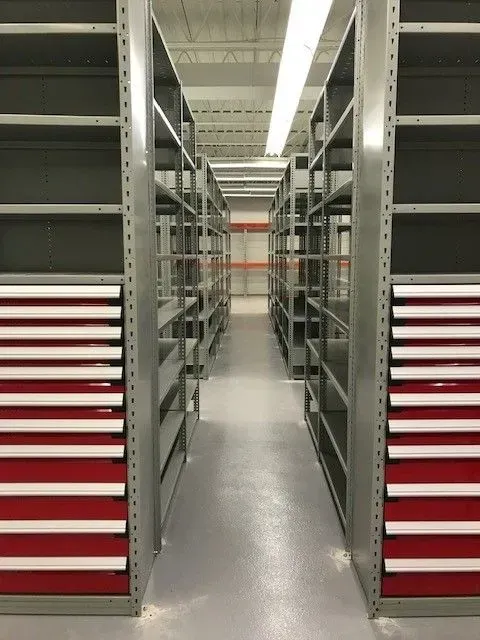
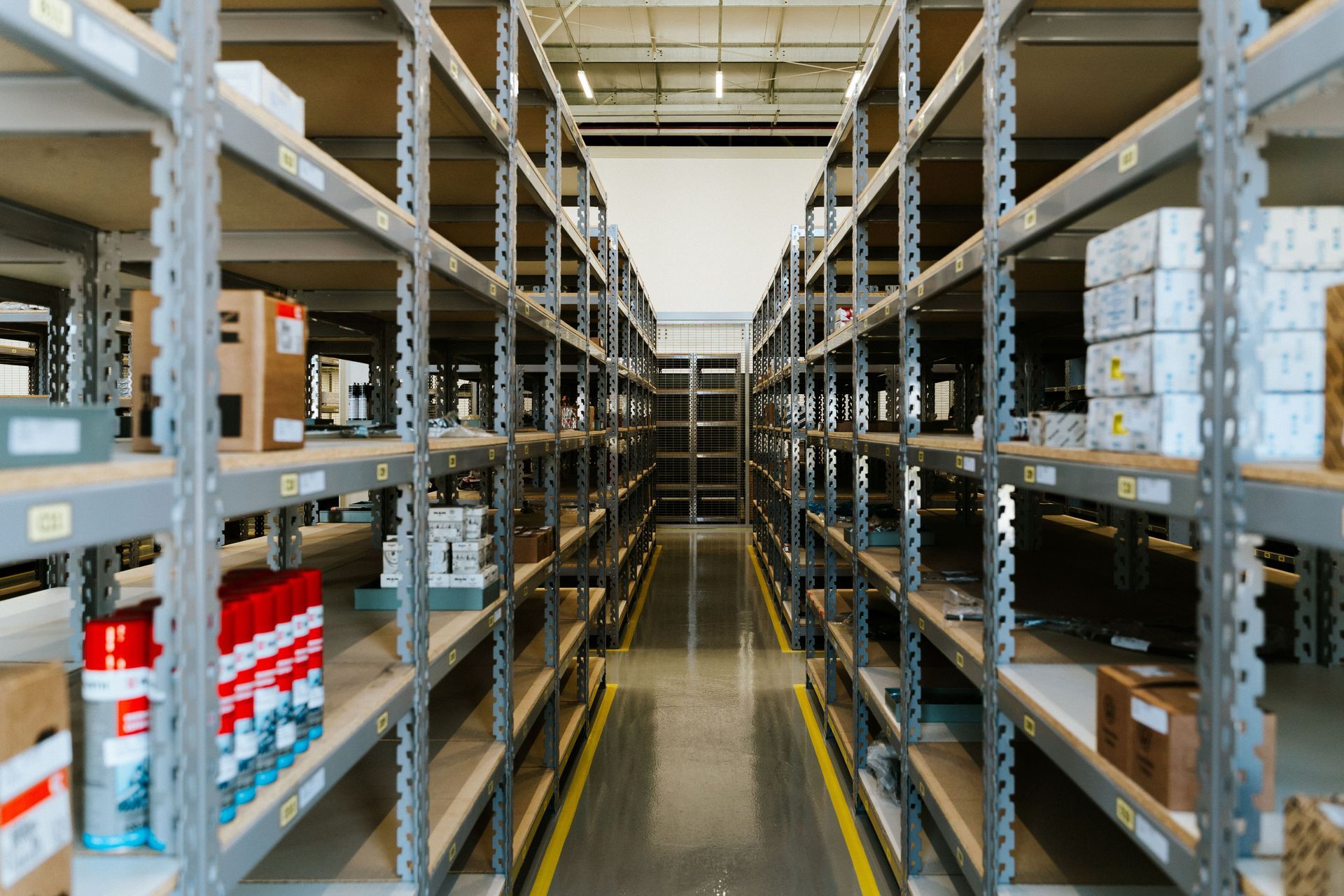
Industrial shelving is a modular, unit-load storage system designed to hold loose items, bins, boxes, parts, and smaller goods that workers need to access directly by hand. Think of it as the heavy-duty evolution of a storage room shelving unit, built to handle real industrial loads and real industrial environments.
At Stor-It Systems, we carry Rousseau industrial shelving, one of the most trusted names in the industry. Rousseau shelving is available in a wide range of configurations to match virtually any storage challenge:
- Open Shelving: ideal for high-frequency access and visual inventory management.
- Closed Shelving: enclosed panels protect contents from dust, debris, and unauthorized access.
- Mini-Racking: bridges the gap between traditional shelving and full pallet racking.
- Shelving with Sloped Shelves: perfect for forward-facing product display and easy picking.
- Shelving with Sliding Panels: maximizes density in tight spaces.
- Mobile Shelving and Mini-Racking: rows mounted on rolling carriages to eliminate fixed aisles.
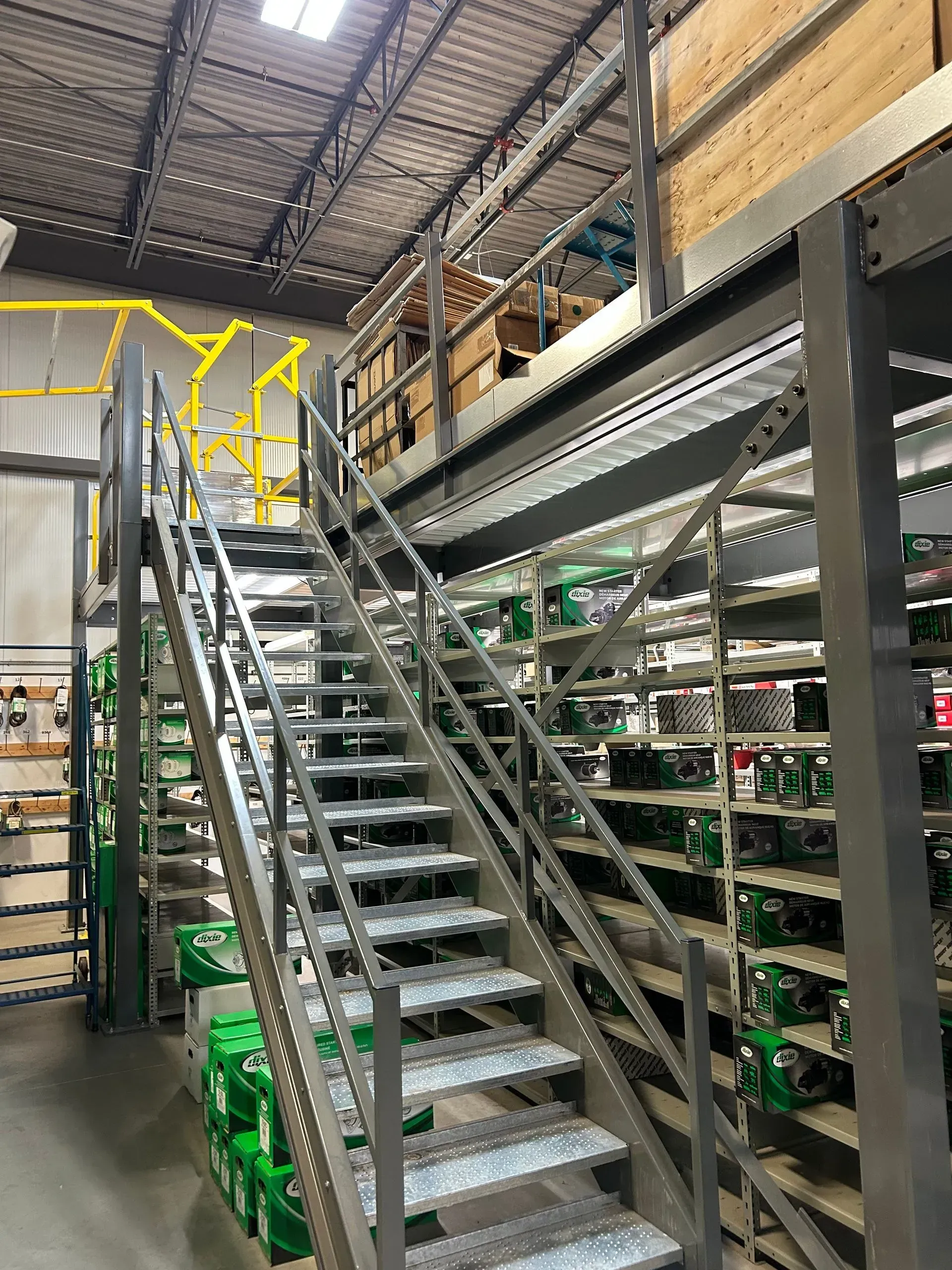
- Multi-Level Shelving: stacked systems that double or triple your usable floor space.
Rousseau shelving is engineered with a boltless clip design, meaning shelves sit on four adjustable clips on one-inch increments with no tools required for reconfiguration. Load capacities range from 450 lbs to 800 lbs per shelf, with reinforcing options available for heavier applications.
This system is built for warehouses, automotive shops, healthcare facilities, government storage, and any environment where organized, accessible storage of small to medium-sized items is the priority. Standard heights run from 39 inches to 123 inches, with high-rise and two-level options available where the building envelope allows.
What Is Pallet Racking?
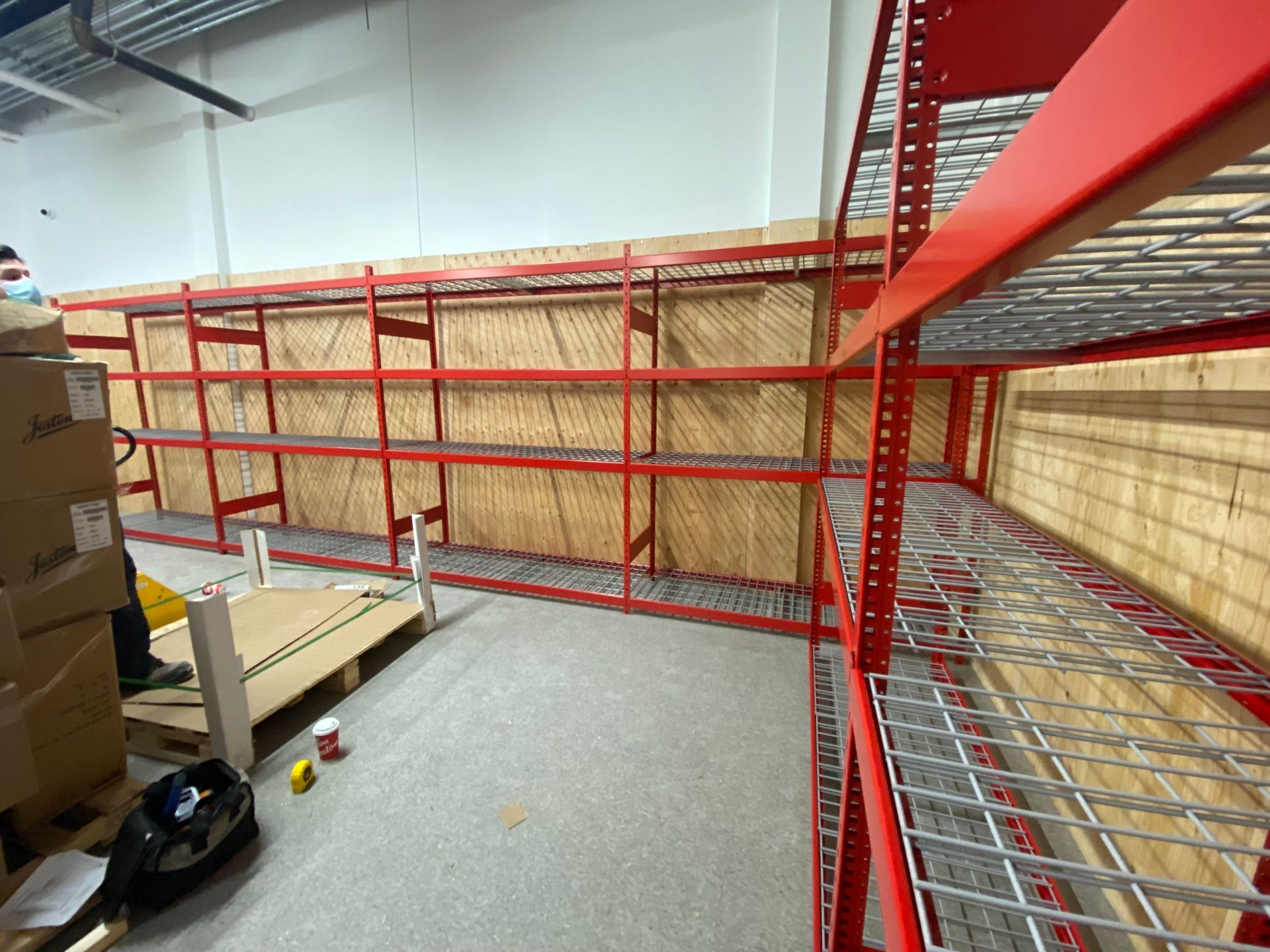
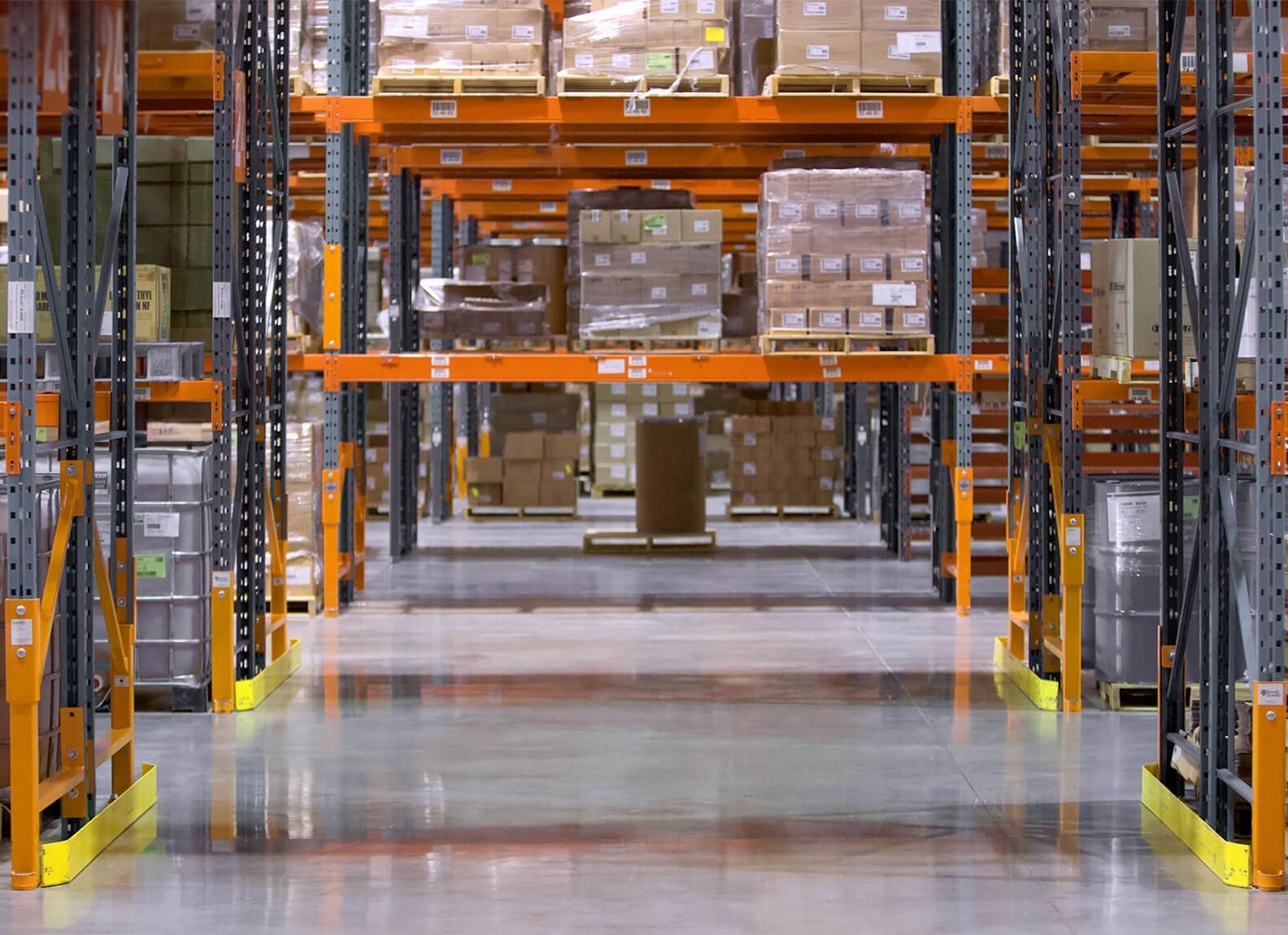
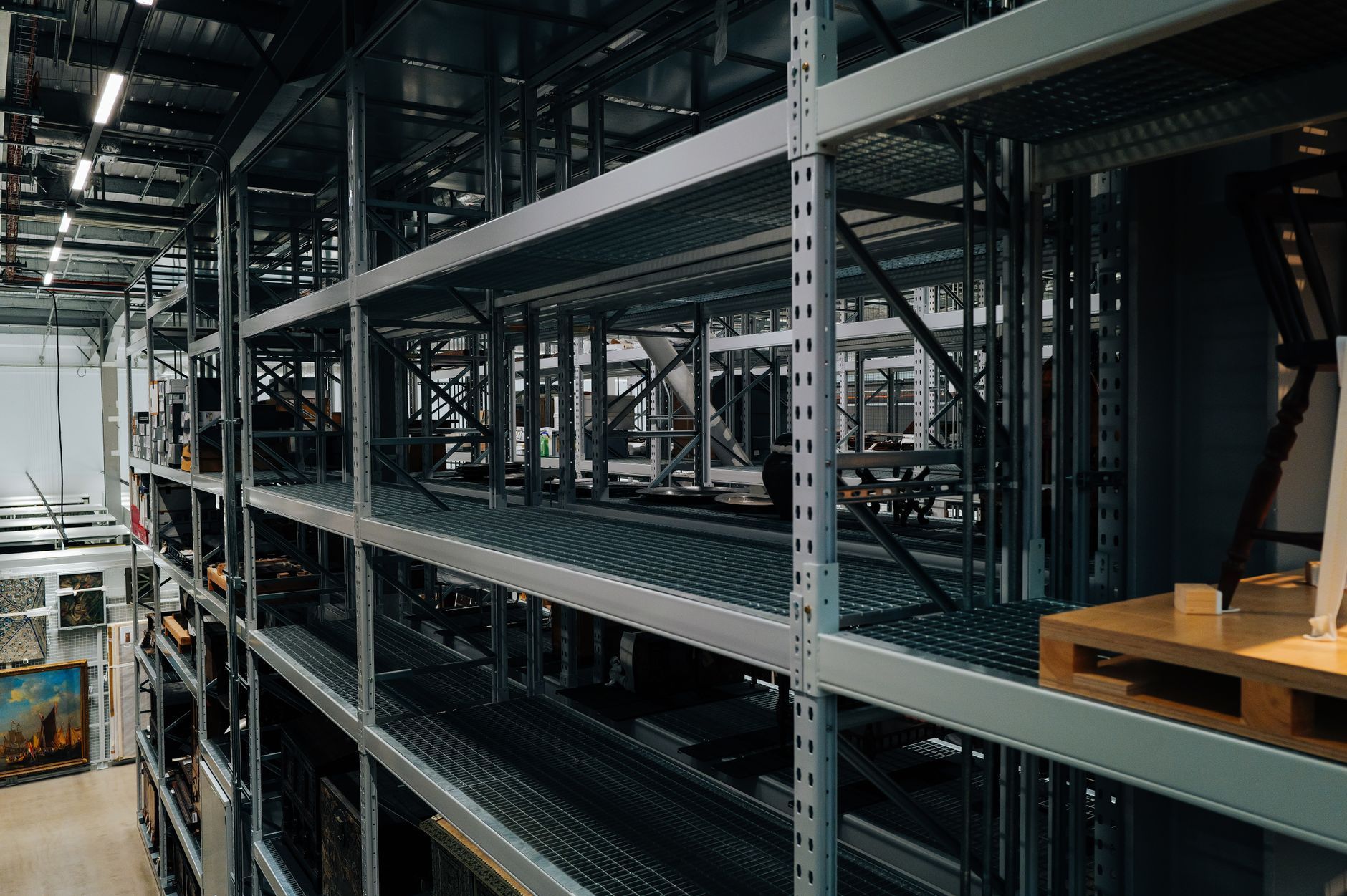
Pallet racking is a structural storage system built to hold palletized loads, meaning goods stacked on pallets and moved by forklifts, reach trucks, or pallet jacks. If industrial shelving is for people reaching in to grab items, pallet racking is for powered equipment lifting full pallets in and out.
Stor-It Systems supplies pallet racking through Space Aid Manufacturing, offering several configurations suited to different operational requirements:
- Single and Double Deep Racking: versatile first-in, first-out access for pallets of varying sizes.
- Bolted Racking: greater flexibility and cost savings compared to welded alternatives.
- Very Narrow Aisle (VNA) Racking: maximum density using wire-guided or rail-guided reach trucks.
- Drive-In Racking: First In, Last Out (FILO) with the highest storage density of any racking type.
- Push Back Racking: FILO design offering more pick faces than drive-in configurations.
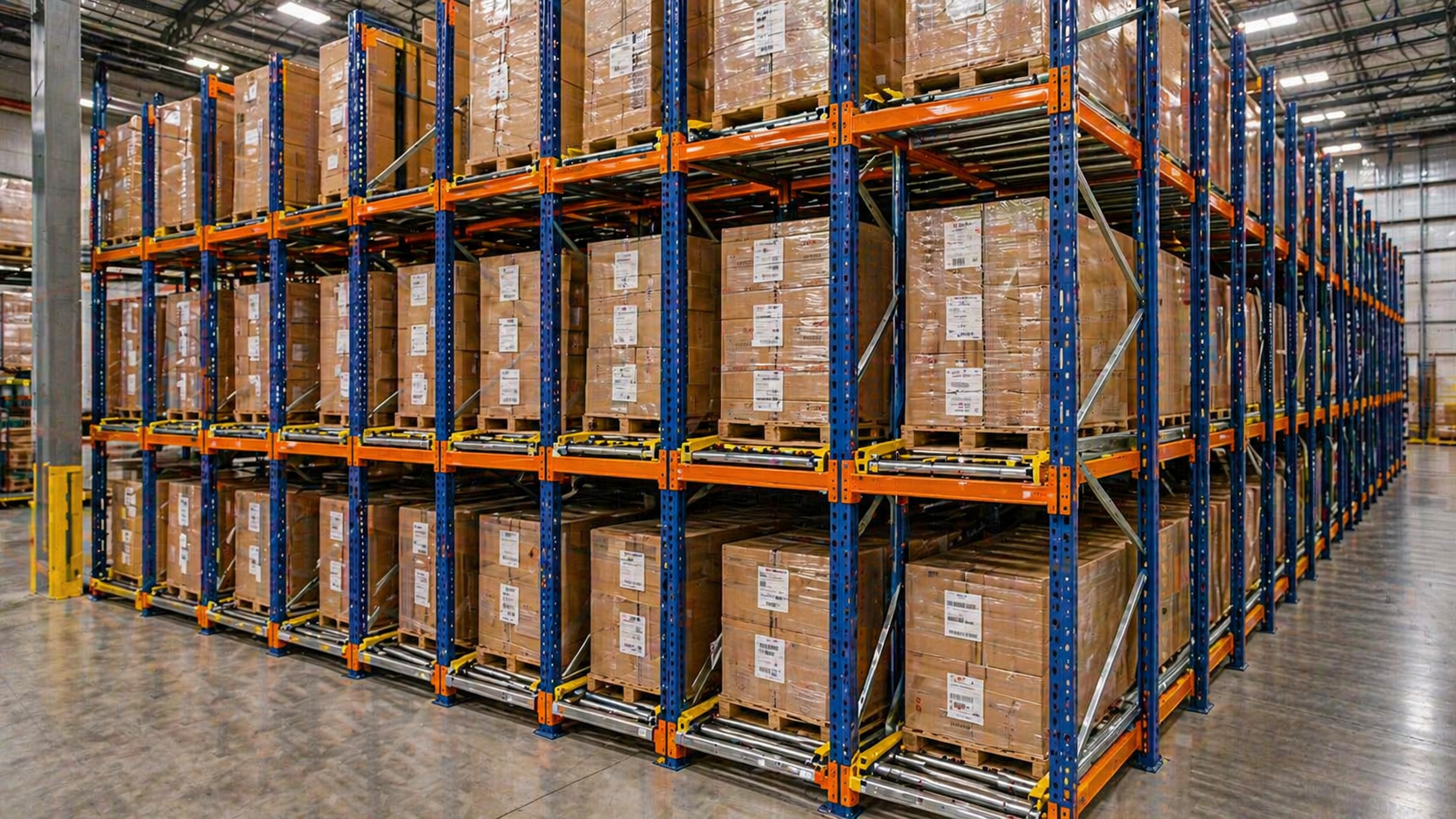
- Pallet Flow Racking: gravity-fed roller tracks advance pallets from restocking to picking positions.
All pallet racking installed by Stor-It Systems is engineered to Canadian national standards and local seismic requirements. Per national guidelines, all racking must be anchored to a concrete slab. Engineered capacity placards are provided for every installation, and regular rack inspections are strongly recommended to maintain safety and compliance.
Key Differences at a Glance
Understanding the core differences between these systems will help you make a confident decision for your operation.
| Factor | Industrial shelving | Pallet racking |
|---|---|---|
| Load type | Bins, boxes, loose parts | Palletized loads |
| Access method | Manual (hand pick) | Forklift / reach truck |
| Unit load | Up to 800 lbs per shelf | Thousands of lbs per pallet |
| Typical height | 39" to 123"+ available | Reaches full ceiling height |
| Best for | Parts, tools, inventory, archives | Bulk goods, consumer products |
| Reconfiguration | Tool-free clip adjustment | Beam repositioning required |
| Floor anchoring | Required in select cases only | Always required per national code |
| Mobile option | Yes, mobile carriages available | Not standard |
How to Choose the Right System
The right system comes down to four main factors: what you are storing, how you are moving it, how often you need access, and what your space allows. Here is how to think through each one.
1. What Are You Storing?
If your inventory is primarily loose items such as parts, tools, files, small boxes, bins, or retail products, industrial shelving is almost always the right answer. Workers can walk up, locate what they need, and pick it directly without equipment.
If your inventory arrives and ships on pallets and is moved by powered equipment, pallet racking is the system built for that workflow. Trying to manually manage palletized loads on shelving is unsafe and inefficient.
2. How Is Your Facility Laid Out?
Standard pallet racking requires dedicated forklift aisles, typically 10 to 12 feet wide for conventional reach trucks. If your facility cannot accommodate that, Very Narrow Aisle racking with specialized equipment reduces that footprint significantly. In facilities where aisle space is truly at a premium and all access is by hand, mobile shelving eliminates fixed aisles entirely, recovering up to 50% of floor space compared to static rows.
Height matters too. Industrial shelving is available from 39 to 123 inches, with high-rise and two-level options for taller facilities. Pallet racking typically uses the full clear height of the building.
3. How Frequently Do You Need Access?
For high-frequency picking, where workers are pulling items many times per day, open shelving or mobile shelving with clear sightlines and ergonomic access reduces fatigue and picking errors. Sloped shelves and sliding panel configurations are particularly effective for forward-facing pick faces.
For lower-frequency, high-density pallet storage, drive-in or push back racking maximizes the product you can store per square foot, at the trade-off of requiring FILO inventory rotation.
4. Do You Need Both?
Many warehouses and distribution centres use both systems in tandem. A receiving area might run pallet racking for bulk storage, while a separate pick area uses industrial shelving for broken-down cases, parts, or kitted products closer to the outbound dock. Stor-It Systems can design both zones as part of an integrated facility layout.
The Stor-It Systems Advantage
Stor-It Systems has been serving Atlantic Canada since 1978, nearly five decades of helping businesses across New Brunswick, Nova Scotia, PEI, and Newfoundland answer exactly these kinds of questions. We are an exclusive dealer for both Rousseau (industrial shelving) and Space Aid Manufacturing (racking solutions), which means you get direct access to two of the most respected product lines in the industry, backed by a team that knows them inside and out.
Our process starts with a consultation and facility assessment. We review your floor plan, ceiling height, inventory profile, and workflow before we ever recommend a product. We then design a system around your actual operation, not a generic template, and handle professional installation and ongoing preventative maintenance once it is in place.
We also carry pre-owned racking for businesses working within tighter capital budgets, and offer rack inspection and repair services for existing systems that need attention.
Safety and Compliance: What You Need to Know
Both shelving and racking systems carry load ratings that must be respected. Overloading is one of the most common causes of warehouse incidents, and it is entirely preventable with the right system, properly installed and correctly used.
For pallet racking specifically, Canadian national guidelines require anchoring to a concrete slab and that engineered capacity placards be displayed on the installation. Regular inspections, both internal and by qualified third parties, are recommended to catch damage before it becomes a hazard.
Stor-It Systems offers a dedicated Warehouse Safety Program that includes rack inspection, risk identification, and compliance support. If you have existing racking that has not been formally inspected, or if you are not sure whether your current setup meets current guidelines, that program is a great place to start.
Frequently Asked Questions
How tall should my industrial shelving be?
Several factors determine the right height, including building restrictions and what you are storing. Standard heights run from 39 to 123 inches, but taller units and two-level systems are available where the space and operation allow. A Stor-It consultant can help you evaluate all the variables.
Does pallet racking need to be anchored to the floor?
Yes. Per national guidelines and manufacturer recommendations, all pallet racking must be anchored to a concrete slab. Installation on gravel, asphalt, or patio stones is not an acceptable practice. Certain applications such as freezers, outdoor use, and high seismic zones may also require more robust anchor specifications.
Can Rousseau modular drawers be added to industrial shelving?
Yes, in most configurations. There are some size restrictions on which shelving units accommodate drawers, and your Stor-It consultant can guide the right selection. Rousseau modular drawers can also be installed in many other brands of shelving.
Do I always need to put the heaviest loads on the bottom beam level?
Yes, for pallet racking this is best practice. Heavier loads on lower levels improve stability and reduce the risk of upright damage. Your Stor-It installation will include capacity placards that specify the rated load for each beam level.
Turn Your Facility Into a Competitive Advantage
The right storage system is not just about where you put things. It is about how fast your team can find and move product, how safely they can do it, and how much of your facility you are actually putting to work. An operation running the right combination of shelving and racking moves faster, makes fewer errors, and scales more easily than one built on guesswork or outdated layouts.
That is what Stor-It Systems is built to help you achieve. Our team starts by understanding how your operation actually runs, including your inventory profile, picking frequency, throughput targets, and floor constraints, and then designs a storage solution around those goals. The result is a facility that works harder for your business, not just a room full of metal.
Whether you are starting from scratch, expanding into a new facility, or trying to get more out of the space you already have, a conversation with our team is the fastest way to see what is possible. Consultations are free and carry no obligation.
Book a free consultation
Call us:
1-800-263-6328
Email: sales@stor-itsystems.com
Proudly serving Atlantic Canada since 1978.
Need Help Planning Your Warehouse or Industrial Space?
Storage, loading docks, commercial doors, and material handling -solved.
No obligation. Local experts.
Insights to fuel your marketing business
Sign up to get industry insights, trends, and more in your inbox.
Contact Us
We will get back to you as soon as possible.
Please try again later.
SHARE THIS