The Complete Guide to Choosing a Storage and Material Handling Partner in Atlantic Canada
July 31, 2026
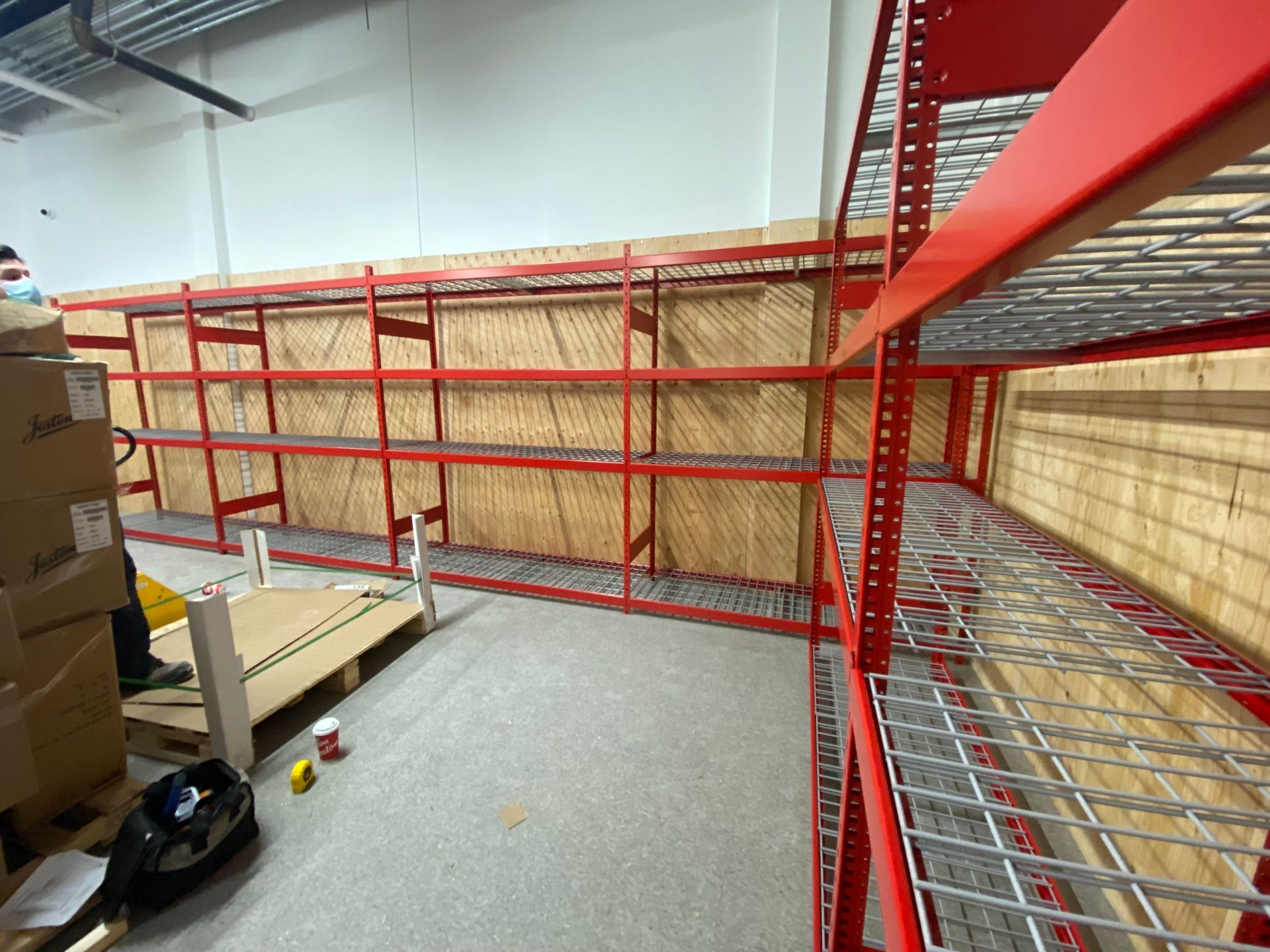
Investing in storage systems or material handling equipment is rarely a simple purchasing decision. Whether you are expanding a warehouse, renovating a manufacturing facility, modernizing a distribution centre, or upgrading storage within a public institution, the decisions made during this process will shape productivity, safety, and operational efficiency for years. In some cases, for decades.
Most organizations start the evaluation process by comparing products and pricing. Those factors matter, but they rarely determine the long-term success of a project. The difference between a storage investment that delivers lasting value and one that creates ongoing frustration almost always comes down to the partner behind the solution, not the specific product that ends up on the floor plan.
A supplier delivers shelving, racking, lockers, workstations, or dock equipment. A material handling partner helps you understand the operational problem you are trying to solve, designs a solution around how your facility actually works, manages the implementation so that daily operations are not disrupted, and continues supporting the system long after installation day. Those are not the same thing, and the gap between them shows up in measurable ways over the life of the investment.
This guide covers the six criteria that should drive any evaluation of storage and material handling providers in Atlantic Canada, the red flags that indicate a supplier is not equipped to serve as a genuine partner, and what a well-structured consultation process looks like in practice. If you are preparing to make a significant storage investment, this is the framework that will help you get it right.
The Real Cost of Choosing the Wrong Supplier
Storage systems are long-term assets. A well-chosen and well-installed system may serve an operation for 20 or 30 years. A poorly chosen one creates costs that accumulate from the day it goes in.
The most visible costs are direct: incorrect equipment that needs to be replaced, an installation that damaged the floor or required rework, racking that was not properly engineered and fails a safety inspection. These situations are frustrating and expensive, but they are at least identifiable.
The less visible costs are often larger. A layout that was never designed around how inventory actually moves forces employees to travel unnecessary distances on every pick, every shift, every day. A storage system that was sized for current inventory without accounting for growth requires an expensive retrofit within a few years rather than a straightforward expansion. A provider with no local presence and no post-installation support leaves the organization to manage maintenance, inspections, and issues independently. These losses do not appear on a single invoice; they accumulate as reduced throughput, higher labour costs, increased error rates, and deferred maintenance that eventually becomes a safety concern.
The lowest quotation today has a reliable tendency to become the highest overall cost over the life of the system. Organizations that have been through that experience once rarely make the same evaluation mistake twice.
Product Supplier vs. Strategic Partner: Understanding the Difference
The most important distinction to make when evaluating providers is whether you are dealing with a product supplier or a strategic partner. The difference is not a matter of company size or product range. It is a matter of how the engagement begins.
A supplier's first question is: what products are you looking for? A strategic partner's first question is: what problem are you trying to solve?
That difference shapes everything that follows. A supplier works backwards from a product catalogue. A partner works forward from an understanding of your operation. The recommendations that come from those two starting points are rarely the same, and the outcomes they produce almost never are.
A genuine material handling partner invests time before making any recommendation in understanding your current operational challenges, your facility layout, how inventory and materials move through the space, how employees interact with storage systems throughout the day, where safety concerns exist, what your growth plans look like over the next five to ten years, and what budget and implementation constraints are in play. Only after that understanding is established should any product be suggested.
This consultation-first approach produces solutions that are built around the operation rather than forcing the operation to adapt to a standard package. It also produces outcomes that are significantly more durable, because the system was designed for how the facility actually works rather than how it looks on a floor plan. Our consultation and design services are structured around exactly this process.
Six Criteria for Evaluating Any Storage and Material Handling Partner
1. Depth of Industry Experience
Experience matters because every industry and every facility type presents genuinely different operational challenges. A warehousing operation has different storage priorities than a manufacturing facility. A hospital archive has different security and access requirements than a university athletics department. A municipal maintenance depot has different equipment accountability needs than a government records room. A provider who has worked extensively across multiple industries and facility types brings accumulated pattern recognition that an internal team or a generalist supplier cannot replicate.
When evaluating industry experience, look beyond years in business. Ask to see a portfolio of completed projects. Ask specifically about experience in your industry and with the type of challenge you are facing. Ask whether the consultants who will manage your project have personally worked on similar installations, not just whether the company has. Experience is only valuable if it is the experience of the people who will actually be responsible for your project. You can explore examples of Stor-It's completed work across Atlantic Canadian industries at stor-itsystems.com/our-work.
2. Consultation Before Quotation
The structure of the initial engagement tells you a great deal about what the rest of the relationship will look like. Providers who offer a price within 24 hours of an initial inquiry, without visiting the facility, reviewing existing systems, or understanding the operational context in any meaningful depth, are providing a number based on assumptions. When those assumptions are wrong, which they frequently are, the cost of correcting them falls on the customer.
A comprehensive consultation should include a walkthrough of the existing facility, a review of current storage systems and their limitations, conversations with the people who actually work within the space daily, identification of workflow bottlenecks and inefficiencies, analysis of current and projected inventory profiles, safety observations, and a clear discussion of budget and implementation constraints. This process takes time, and a provider who invests that time before presenting a recommendation is demonstrating that their goal is a successful outcome, not a quick transaction.
3. Product Breadth and Solution Flexibility
No single product solves every storage or material handling challenge, and no single product category addresses the full range of operational requirements within a complex facility. A strong partner offers genuine breadth across the storage and material handling spectrum and, more importantly, has the expertise to know when each solution is and is not appropriate.
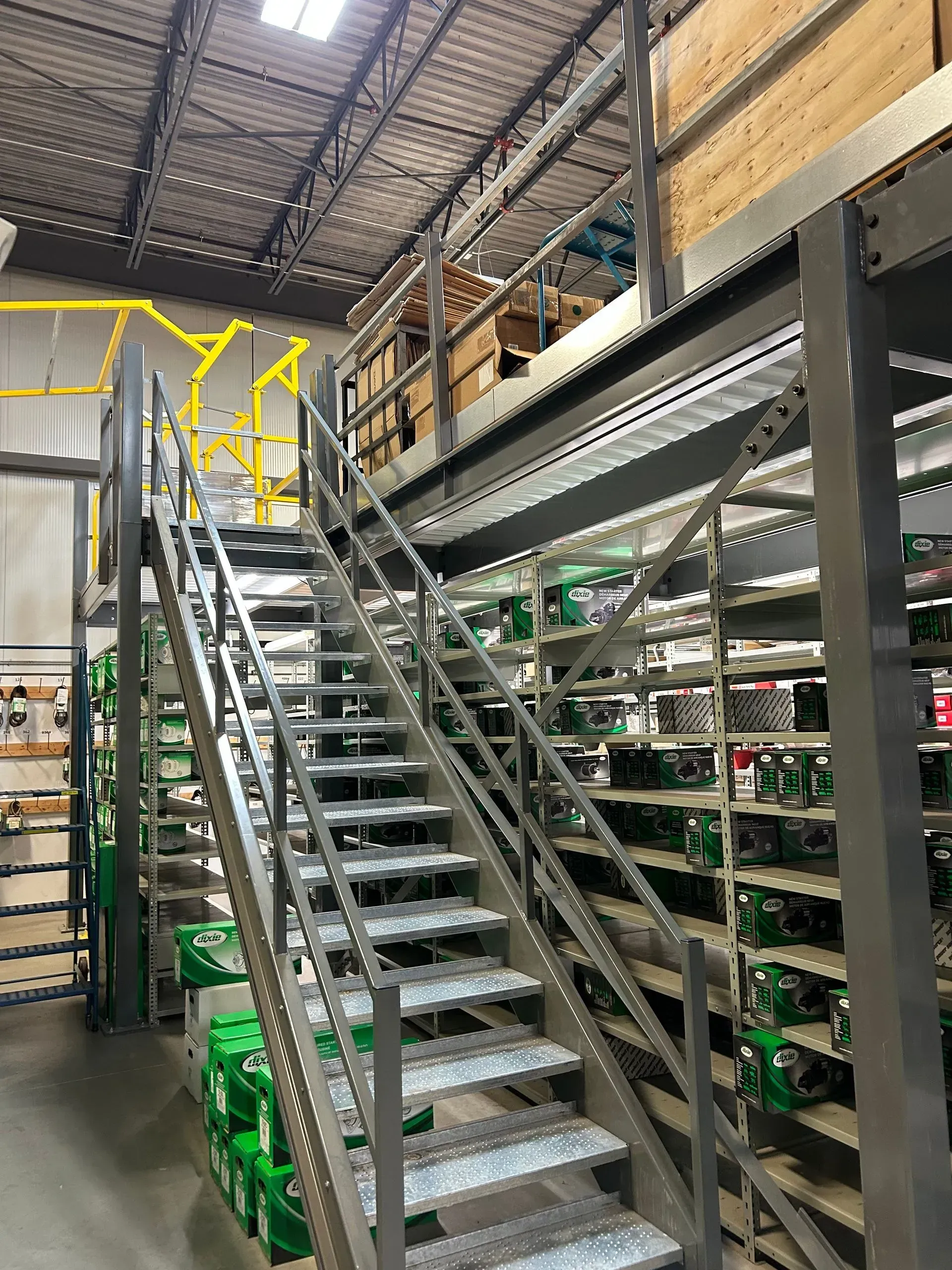
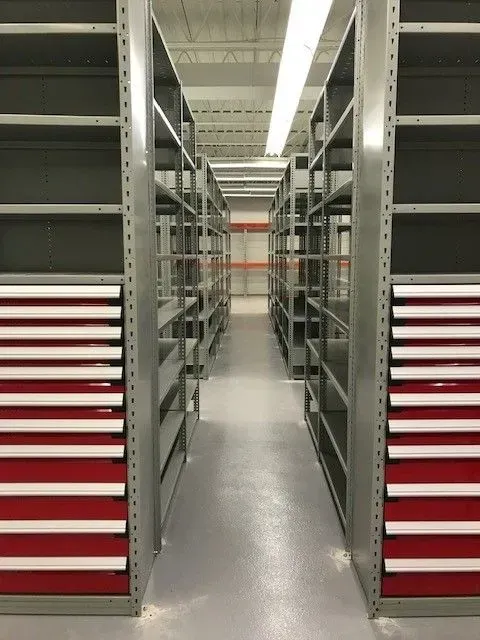
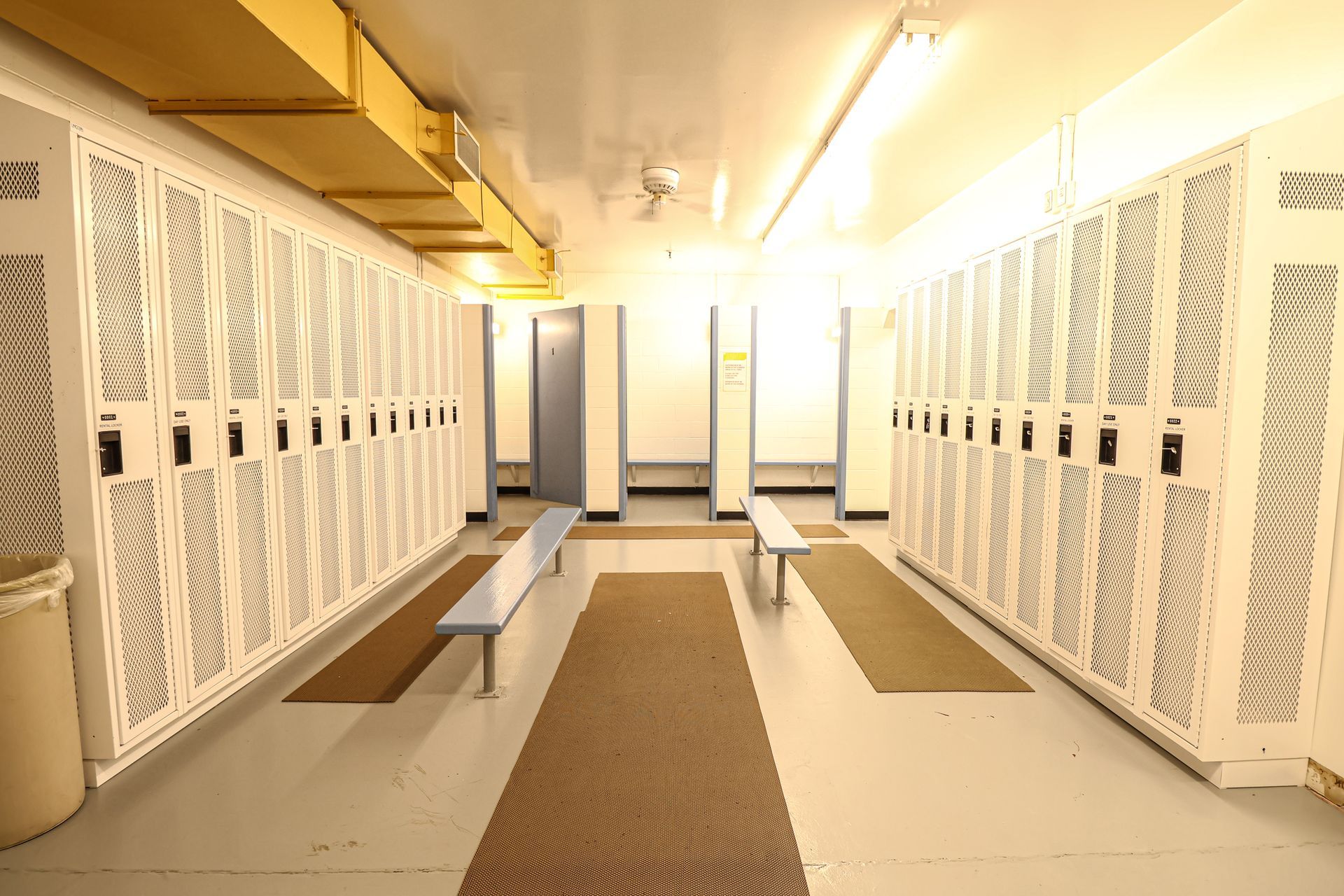
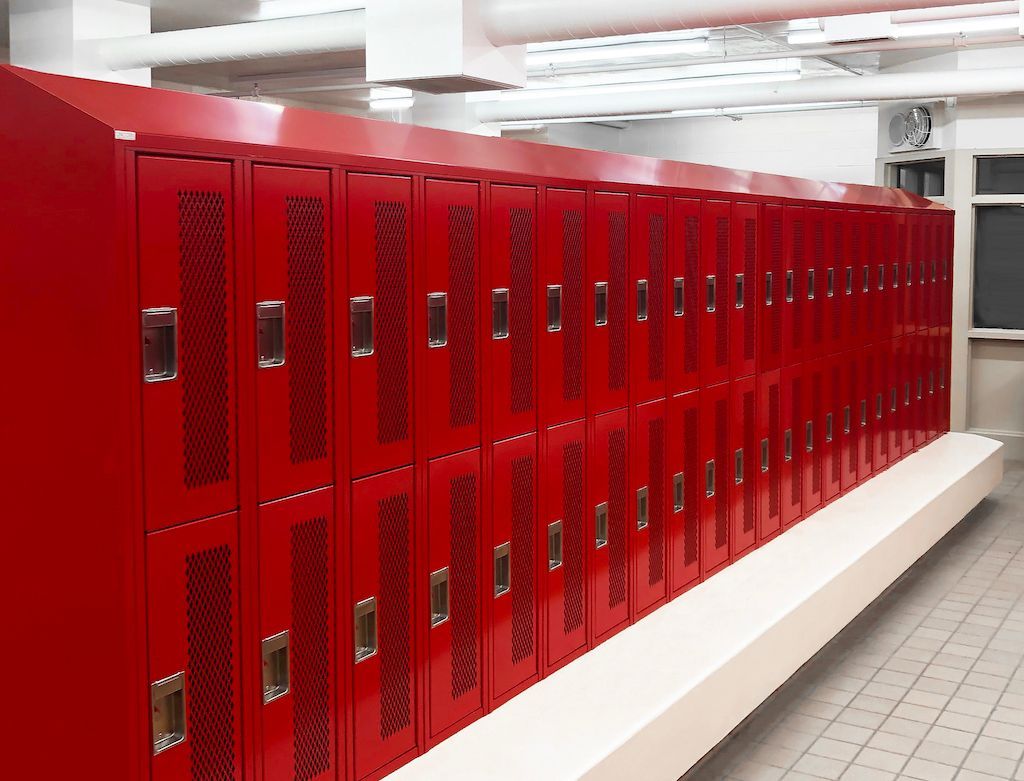
A manufacturing facility may need pallet racking in the reserve storage zone, industrial shelving in the active pick area, modular workstations at assembly and packing stations, and dock levelers and vehicle restraints at the outbound threshold. A healthcare organization may need high-density mobile shelving for archives, secure cabinets for clinical supplies, and staff locker systems for a clinical change room renovation. A distribution centre expanding vertically may need a mezzanine structure that integrates with existing racking rather than a new building addition.
The right partner evaluates your specific workflow, inventory, space constraints, and operational objectives before recommending a combination of products that work together as an integrated solution. The goal is never to fit your operation into a standard package. It is to design a solution that fits how your operation actually runs, today and as it grows.
4. Installation Quality, Project Management, and Continuity
The quality of a storage investment is measured by far more than the specifications of the products installed. How those products are installed, by whom, under what level of oversight, and with what level of coordination around your operational schedule determines whether the project delivers its intended value or creates new problems while solving old ones.
Ask prospective partners who will manage your project from start to finish. Will a single point of contact oversee the process from initial consultation through final walkthrough, or will responsibility transfer between sales, design, and installation teams at each stage? How are site measurements verified before fabrication begins? How are layout drawings reviewed and approved? How is the installation phased if your facility needs to remain operational throughout?
For most Atlantic Canadian organizations, installation happens while normal business continues. Warehouses keep shipping. Manufacturers keep producing. Hospitals keep treating patients. Universities remain occupied. An experienced project manager understands how to sequence installation work around your operational schedule, maintain safe working conditions throughout, and communicate proactively when timelines shift. That capability is not universal, and the absence of it is one of the most common sources of project dissatisfaction. Our professional installation services are built around managing exactly these complexities.
5. Safety and Regulatory Knowledge
Industrial storage systems support significant loads in environments where forklifts, employees, and inventory interact continuously. Improper design, incorrect product selection, inadequate anchoring, or poor installation practices can introduce safety risks that may not be immediately visible but create real exposure over time. A material handling partner with genuine safety knowledge designs systems that eliminate these risks from the outset rather than creating compliance problems that need to be corrected later.
Relevant areas of safety expertise include rack load capacity engineering and placard requirements, proper anchoring to Canadian standards, seismic requirements applicable to Atlantic Canadian locations, correct aisle widths for the material handling equipment in use, forklift operating clearances, pedestrian separation, rack protection systems, and the structure of ongoing inspection programs that keep the system performing safely as the operation grows. Our warehouse safety programs and rack inspection and repair services reflect the importance we place on safety as an ongoing operational commitment, not a one-time installation checklist.
When evaluating any provider, ask directly how safety considerations were incorporated into their recommendation. A provider who cannot answer that question in specific terms is a provider whose recommendation was not built with safety as a primary design criterion.
6. Long-Term Partnership Capability
One of the most common and most costly mistakes organizations make is treating a storage project as a one-time purchase. Facilities evolve continuously. New product lines are introduced. Operations expand into new zones or new buildings. Technology changes the nature of picking and packing work. Additional employees are hired. Buildings are renovated. A storage system that was perfectly suited to the operation at installation may need to grow, adapt, or be extended within a few years.
A long-term partner already understands your facility, your operational goals, and the history of decisions that shaped the current system when that moment arrives. Expansion projects become faster and less expensive because the groundwork has already been laid. Recommendations become more strategic because the context is already understood. For organizations operating multiple facilities across Atlantic Canada, this accumulated institutional knowledge simplifies standardization and future expansion across locations in ways that starting from scratch with each project never can. Our preventative maintenance program is one of the ways we support this continuity after installation.
Why Local Presence Matters in Atlantic Canada
Atlantic Canada presents operational characteristics that national and international suppliers do not always appreciate or account for. Facilities are distributed across four provinces with varying transportation logistics, different provincial building code interpretations, different procurement requirements for public sector work, and weather patterns that affect construction schedules and installation timelines in ways that inland Canadian operations do not face to the same degree.
Working with a local partner means working with a team that already understands these realities. Response times for service requests are faster when the support team is in the region rather than managing Atlantic Canada accounts from a central Canadian office. Relationships with local trades and general contractors simplify coordination on larger projects. Knowledge of regional procurement frameworks reduces friction on institutional and government projects. Familiarity with the industries that drive each province's economy produces more relevant and better-calibrated recommendations.
There is also an accountability dimension that matters. When a partner operates within the communities they serve, the long-term success of each project is inseparable from their reputation and their continued ability to do business in the region. That dynamic produces a different level of commitment to outcomes than a transactional relationship with a supplier who does not depend on Atlantic Canadian relationships for their core business. Stor-It Systems has built its reputation across New Brunswick, Nova Scotia, PEI, and Newfoundland over nearly 50 years on exactly this basis. Learn more about our team and our history.
Red Flags to Watch for During the Quoting Process
Receiving multiple quotations is a normal and appropriate part of any significant purchasing process. But comparing line items and final totals rarely tells the full story of what each proposal actually represents. A lower number may reflect a simpler scope, different product specifications, excluded services, or a fundamental misunderstanding of the operational requirements. Here are the signals that indicate a provider is not positioned to serve as a genuine partner.
A quotation arrived without a site visit
If a provider delivers a proposal after only a phone call or an email exchange, without walking the facility, reviewing existing systems, or speaking with the people who work in the space, the proposal is built on assumptions. When those assumptions are wrong, the cost of correcting the gap falls on the customer. No meaningful storage solution can be accurately designed without seeing the facility and understanding the operation firsthand.
The recommendations look generic
Every facility is operationally different. A proposal that recommends the same product configuration regardless of your industry, your inventory profile, or your workflow suggests a catalogue-driven approach rather than a solution designed for your specific situation. If the proposal could have been sent to any warehouse in Atlantic Canada without modification, it was not designed for your warehouse.
Future growth was not discussed
A storage system should support the operation it is being designed for, not just the operation that exists today. If expansion capacity, modular flexibility, and future reconfiguration were not discussed during the evaluation process, the system being quoted may create expensive constraints within a few years. The best time to plan for growth is before installation, not after.
The installation process is vague
A proposal that does not clearly describe who manages installation, how the work is sequenced around operational needs, what the timeline looks like, and who is responsible for coordinating with other trades or facility contacts is a proposal that has not accounted for the complexity of professional installation. Vague installation terms are a reliable predictor of project management problems once the work is underway.
Post-installation support is not addressed
The relationship with a material handling partner should not end on the day the installation crew leaves. Ask directly what post-installation support looks like: are inspection services available, can replacement components be sourced, how are warranty issues handled, and who is the point of contact for future expansion planning? A provider who cannot answer these questions clearly is effectively ending the relationship at handover.
What a Great First Consultation Looks Like
A well-structured first consultation with a material handling partner should leave you with a clearer understanding of your own operation than you had going in. That is not a sales technique; it is the natural result of a process designed to surface the real operational drivers behind a storage challenge.
A comprehensive first consultation typically includes a walkthrough of the existing facility with attention to current layout, traffic flow, storage utilization, and safety conditions; a review of existing storage systems and their limitations; conversations with employees who interact with the storage environment daily, not just with management; identification of workflow inefficiencies and bottlenecks that may not be immediately visible; analysis of current inventory profiles and projected growth; and an honest discussion of budget, timeline, and implementation constraints.
What a good consultation does not do is conclude with an immediate product recommendation. The value of the consultation is in the understanding it produces. Recommendations that come from that understanding are more accurate, more durable, and more likely to deliver the operational outcomes the organization is actually looking for. Our guide on warehouse layout design covers how this approach applies specifically to facility layout decisions, and our guide on institutional storage solutions shows how it translates to the unique requirements of public sector and institutional clients.
The Stor-It Systems Difference
Stor-It Systems has been helping organizations across Atlantic Canada improve the way they store, move, and manage materials since 1978. That nearly five decades of experience across New Brunswick, Nova Scotia, Prince Edward Island, and Newfoundland has reinforced a consistent lesson: the best outcomes come from listening first.
We are an exclusive dealer for some of the most respected names in the storage and material handling industry, including Rousseau modular shelving and workstations, Space Aid Manufacturing pallet racking, Spacesaver high-density storage systems, and Lincora locker systems. That product breadth means we are not limited to recommending what we happen to sell; we can recommend what the operation actually needs and have access to the right product to deliver it.
More importantly, our process is built around understanding before recommending. Every project begins with a consultation that evaluates your facility, your workflow, your inventory, your people, and your growth plans before a single product is suggested. Our full range of services, from space planning and layout design through professional installation and ongoing maintenance support, are structured to support organizations through the complete project lifecycle, not just the purchasing decision.
Our success is measured not by the equipment we install but by the operational improvements our customers achieve and sustain over time. That is the standard we hold ourselves to on every project, and it is the standard you should apply when evaluating any storage and material handling partner.
Frequently Asked Questions
- How early in the planning process should we involve a storage and material handling partner?
- The earlier the better, and significantly earlier than most organizations typically do. Involving a partner during the initial planning or pre-construction stage often identifies layout opportunities, spatial efficiencies, and system design decisions that are far less expensive to implement before construction begins than to retrofit afterward. If you are planning a new facility, a building expansion, or a significant renovation, a storage consultant should be part of the planning conversation from the start, not brought in after the floor plan has been finalized.
- Can existing storage systems be expanded rather than replaced?
- In many cases, yes. Modular storage systems from manufacturers like Rousseau and Space Aid are specifically designed to accommodate future growth. Additional bays, frames, beams, and accessories can often be added to an existing installation without replacing the underlying structure, provided the existing components are in good condition and the new configuration is compatible. A professional assessment of the current system is the right first step before committing to either an expansion or a full replacement.
- Does Stor-It Systems work with industries beyond warehousing and distribution?
- Yes. Stor-It Systems serves manufacturers, distribution centres, educational institutions, healthcare organizations, municipalities, provincial and federal government departments, automotive operations, utilities, commercial businesses, and public institutions throughout Atlantic Canada. Storage and material handling challenges are present in virtually every operational environment, and our team has experience designing solutions across all of these sectors. You can see examples of completed work across industries at stor-itsystems.com/our-work.
- What information should we prepare before requesting a consultation?
- The more context you can provide, the more productive the first conversation will be. Useful information includes building dimensions and ceiling height, current inventory volumes and product dimensions, existing equipment and storage systems, your primary operational challenges, growth projections for the next three to five years, and any regulatory or compliance requirements specific to your industry. A floor plan is helpful if one is available, but not required. Our team can help develop an accurate picture of the facility and the operation during the consultation process. Book a consultation here.
- What makes a local Atlantic Canada partner different from a national supplier?
- Local expertise means faster response times, a working knowledge of regional procurement processes and building code requirements, established relationships with Atlantic Canadian trades and contractors, and a long-term presence in the communities where your facilities operate. It also means accountability: a local partner's reputation depends on the quality of the work they do in the region, which produces a different level of commitment to outcomes than a transactional relationship with a supplier whose core business is elsewhere. Stor-It Systems has operated across all four Atlantic provinces for nearly 50 years. That regional depth is not something that can be replicated by a company managing Atlantic Canada as a secondary market.
- What does post-installation support look like with Stor-It Systems?
- The relationship does not end at installation. Stor-It Systems provides preventative maintenance programs, rack inspection and repair services, warehouse safety programs, and ongoing support for future expansion and system modifications. When your operation grows or changes, our team already understands your facility and your system, which makes future projects faster, less disruptive, and more cost-effective than starting from scratch with a new supplier.
Choose a Partner, Not Just a Supplier
Choosing a storage and material handling partner is one of the most consequential facility decisions an Atlantic Canadian organization makes. The right partner does not simply provide equipment. They help improve operational efficiency, maximize available space, enhance workplace safety, and support the organization's growth over years and decades. When recommendations are built on genuine consultation rather than a catalogue, every solution becomes more intentional, more integrated, and more aligned with how the operation actually works.
For nearly 50 years, organizations throughout New Brunswick, Nova Scotia, Prince Edward Island, and Newfoundland have trusted Stor-It Systems to deliver storage and material handling solutions built around their specific operational challenges. We believe every project starts with listening, every recommendation should solve a real problem, and every customer relationship should continue delivering value long after the installation is complete.
If you are evaluating storage and material handling partners for an upcoming project, we would welcome the opportunity to demonstrate what a consultation-first approach looks like in practice. Book a free consultation with our team today.
Need Help Planning Your Warehouse or Industrial Space?
Storage, loading docks, commercial doors, and material handling -solved.
No obligation. Local experts.
Insights to fuel your marketing business
Sign up to get industry insights, trends, and more in your inbox.
Contact Us
We will get back to you as soon as possible.
Please try again later.
SHARE THIS
Latest Posts