Loading Dock Equipment: A Buyer’s Guide
November 2, 2026

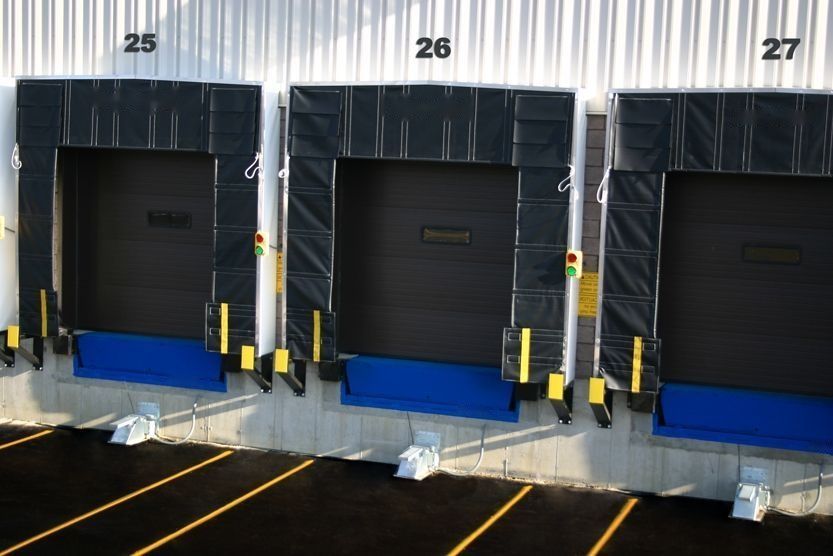
A loading dock is an interface between a building, vehicles, handling equipment, and people. Buying dock equipment therefore starts with the way that interface operates. A leveler, restraint, seal, or control may be individually well made and still be unsuitable for the vehicles, duty, or physical conditions at a particular location.
In short
Survey the dock, vehicle range, loads, handling equipment, and usage before comparing products. Treat levelers, restraints, seals or shelters, doors, and controls as coordinated decisions. Confirm model-specific capacity and compatibility through the supplier’s assessment, and compare building work, installation, commissioning, training, and service. Replacement should be specified for present use, not automatically copied from the old equipment.
Distinguish the equipment roles
A leveler provides a designed transition across the dock-to-vehicle interface. The required operating range and capacity depend on the complete application, not just the heaviest pallet.
A vehicle restraint addresses movement of compatible vehicles at the dock within its designed application. The selection needs a clear understanding of the fleet and the site’s operating procedures.
Seals and shelters address the opening around the vehicle. Controls and communication devices coordinate information and operation. Each function should be discussed separately before the combined arrangement is specified.
Compare leveler approaches by duty and operation
Mechanical, hydraulic, and air-powered levelers are different operating approaches represented in the market. Their suitability depends on application, expected use, operating preferences, maintenance, and the specific product design.
Do not assume a powered model is automatically the right choice or a mechanical model automatically has the lowest total cost. Compare the proposed models against the same duty and service expectations.
Ask how operators use the equipment, which checks apply, what training is provided, and how technical service is handled. Obtain the relevant model documentation before approval.
Specify the load crossing the interface
The handled goods are part of the load, but so is the handling equipment and the way it operates. Vehicle and load movement can introduce design considerations that a simple pallet-weight comparison misses.
Provide the supplier with actual equipment details, load characteristics, frequency, and operating conditions. Ask for the selection rationale and the applicable rating information.
Capacity labels from two different products should not be treated as directly comparable without understanding their basis. The right question is whether the model is suitable for the stated duty.
Review the fleet and building together
List the relevant truck and trailer types, their dimensions, and any unusual vehicles that must be accommodated. Include changes expected from suppliers or distribution operations.
Then document the building side: opening, dock height, pit where present, approach conditions, available power, and other equipment. Existing drawings and a site survey help identify what needs verification.
A new vehicle mix can change the requirements even when the dock opening has not changed. That is why replacement should include an application review instead of relying only on the old model number.
Choose seals and shelters around real variation
A facility receiving a consistent vehicle type has a different brief from one receiving a wide range. Discuss the contact arrangement, opening access, environment, and wear with the supplier.
Seals and shelters can help manage the interface, but their performance depends on suitable selection and operation. Avoid claiming a particular energy saving or weather outcome without a justified application-specific basis.
Include doors and surrounding building conditions in the conversation. Replacing one component may not address an issue caused elsewhere in the opening.
Compare the full installed package
For a hypothetical replacement, proposal A might include the leveler, controls, and installation while proposal B excludes electrical work and disposal. Identify those differences before comparing totals.
Ask who surveys the site, confirms compatibility, performs building alterations, commissions the equipment, and trains operators. Define the service arrangement and documentation delivered at handover.
Finally, plan the dock closure and reopening. Equipment arrival is not the same as readiness for use. The agreed completion process should establish when operations can resume and what restrictions, if any, remain.
Planning checklist
Document the vehicles and activity
Record the types of trucks and trailers using the dock, their relevant dimensions, and any variations that create problems. Explain the busiest periods and how frequently the dock is used.
Describe the handling equipment and loads that cross between the building and vehicle. Give the supplier actual operating information rather than choosing a rating from the load weight alone.
Photographs of the dock, approach, door opening, and existing equipment help establish the next questions.
Review the existing building
A replacement project should not assume the old installation represents the right specification. Usage or vehicles may have changed since it was installed.
Provide available drawings and information about the pit, opening, power supply, and adjacent building conditions. Identify anything that needs inspection before a final proposal.
The responsible project professionals should confirm the required building work, approvals, and equipment suitability. An attractive equipment price does not resolve those site questions.
Plan for the people operating it
Ask how staff will use the proposed controls, recognize operating status, and respond to a fault. Confirm what training and documentation accompany the installation.
Discuss how drivers are informed of the site procedure and how communication works during loading and unloading. Equipment is one part of that process.
Where different docks use different systems, consider whether the variation creates avoidable confusion. Any proposed standardization still needs to accommodate the requirements of each location.
Include service in the purchase decision
Request the maintenance information for the specific models being proposed. Ask who can service them, how faults are reported, and which activities remain the responsibility of the facility.
A planned replacement also needs a continuity plan. Establish whether another dock can take the work, what must be rescheduled, and when the new equipment can be released for use.
Compare the complete scope: supply, building preparation, installation, commissioning, training, and ongoing support.
Frequently asked questions
Which type of dock leveler should we buy?
Choose through an application review of vehicles, handling equipment, loads, frequency, building conditions, and service requirements. Mechanical, hydraulic, and air-powered approaches have different characteristics. Compare the actual proposed models rather than assuming one operating type always suits every facility.
Can I select capacity from the heaviest pallet?
No. Provide the supplier with the complete application, including handling equipment and operating duty. Ask how the relevant product rating applies. Pallet weight alone does not establish the capacity or configuration needed at the dock.
Should a replacement match the old leveler?
Use the existing equipment as information, not the final specification. Vehicles, loads, usage, and building conditions may have changed. Review why replacement is needed and confirm suitability for the current application before selecting the new model.
Do we need a vehicle restraint?
The appropriate vehicle-control arrangement must be assessed for the site, fleet, and procedures. Discuss compatibility and operating requirements with the supplier and responsible safety team. Do not assume one device will engage every vehicle arriving at the facility.
What is the difference between a seal and a shelter?
They use different approaches to managing the opening around vehicles. The suitable option depends on the vehicle range, opening, access, exposure, and application. Ask the supplier to explain the proposed arrangement and its limitations using your actual dock conditions.
Can dock equipment share controls?
Coordinated controls may be available for certain equipment combinations, but compatibility and intended operation must be confirmed. Ask about the sequence, status indications, faults, and training. Do not combine components based only on the appearance of their control panels.
What should a dock survey record?
Capture vehicle information, equipment identifiers, opening and dock dimensions, pit information where relevant, approach, power, and visible site constraints. Qualified professionals should verify the details that affect design or installation before a final equipment selection is approved.
Does installation include electrical and building work?
Not necessarily. Ask for explicit responsibilities and exclusions covering power, structural work, removal, disposal, commissioning, and other trades. Compare the complete project scope, including customer responsibilities, rather than the equipment-and-labour total alone.
How do we prepare operators for new equipment?
Arrange the appropriate model-specific instructions and training, including normal use, reporting faults, and site procedures. Confirm who provides the training and how records are maintained. New controls should not be treated as self-explanatory because staff used the previous equipment.
What should we ask Stor-It before ordering?
Confirm suitable products, site assessment, delivery and installation scope, completion checks, training, supported service, and exclusions. Provide vehicle and load information as well as photos. Ask the team to explain how the proposal addresses the actual dock application.
Prepare a dock equipment enquiry
Contact Stor-It Systems with your location, photographs, equipment information, and a description of the vehicles and loads involved. Explain what is driving the purchase, whether replacement, expansion, or an operating issue. That gives the team a practical basis for discussing suitable dock equipment.
Related solutions
Need Help Planning Your Warehouse or Industrial Space?
Storage, loading docks, commercial doors, and material handling -solved.
No obligation. Local experts.
Insights to fuel your marketing business
Sign up to get industry insights, trends, and more in your inbox.
Contact Us
We will get back to you as soon as possible.
Please try again later.
SHARE THIS